

By Yekini Jimoh
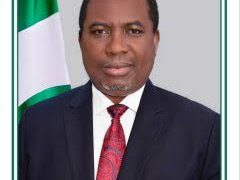
In an era where governance is increasingly measured not only by policies but by how effectively those policies are communicated, the Kogi State Commissioner for Information, Kingsley Fanwo, has emerged as a pivotal figure in shaping the narrative of the state’s development.
Since assuming office, Fanwo has distinguished himself as more than just a government spokesperson.
He has positioned the Ministry of Information and Communication as a strategic hub for public engagement, transparency, and policy advocacy. His approach reflects a blend of media savvy, political awareness, and a clear understanding of the role communication plays in governance.
One of his notable achievements is the strengthening of government-media relations.
Under his leadership, the flow of information between the Kogi State Government and the public has become more structured and proactive. Regular press briefings, timely responses to public concerns, and increased accessibility to government officials have helped reduce misinformation and build public trust.
Fanwo has also played a key role in projecting the policies and achievements of the administration of Governor Ahmed Usman Ododo.
Through coordinated media campaigns and strategic messaging, the ministry has amplified government initiatives in areas such as security, infrastructure, healthcare, and education. This has not only enhanced the visibility of the administration’s efforts but has also attracted wider public support.
In addition, he has embraced digital transformation in government communication. Recognizing the influence of social media and online platforms, Fanwo has overseen the expansion of the state’s digital presence.
Government information is now disseminated more rapidly and reaches a broader audience, particularly young people who rely heavily on digital platforms for news and updates.
Another area where the commissioner has made impact is crisis communication. In moments of tension or uncertainty, his prompt and measured responses have helped calm public anxiety and provide clarity. This ability to manage narratives during critical periods has reinforced confidence in the government’s responsiveness.
Beyond media relations, Fanwo has been instrumental in promoting unity and countering divisive narratives within the state. Through consistent messaging that emphasizes inclusivity and collective progress, he has contributed to fostering a sense of shared purpose among the people of Kogi.
Critics may argue that government communication often leans toward promotion rather than scrutiny, but even within that context, Fanwo’s tenure reflects a noticeable shift toward professionalism and strategic engagement.
As Kogi State continues on its development path, the role of effective communication remains indispensable. Kingsley Fanwo’s contributions underscore the importance of not just implementing policies, but ensuring that citizens are informed, engaged, and connected to the governance process.
In the broader landscape of public administration, his work serves as a reminder that communication, when done right, can be a powerful tool for governance, accountability, and social cohesion.
Yekini Jimoh writes from Kogi state