

Kogi State Government in partnership with Sightsavers to administer schistosomiasis treatment to more than 240,000 children between the ages of five and 14 across 15 Local Government Areas of the state during the 2026 Mass Administration of Medicines (MAM) campaign.
The exercise, scheduled to hold from June 22 to June 30, will cover 39 wards identified as endemic to the disease.
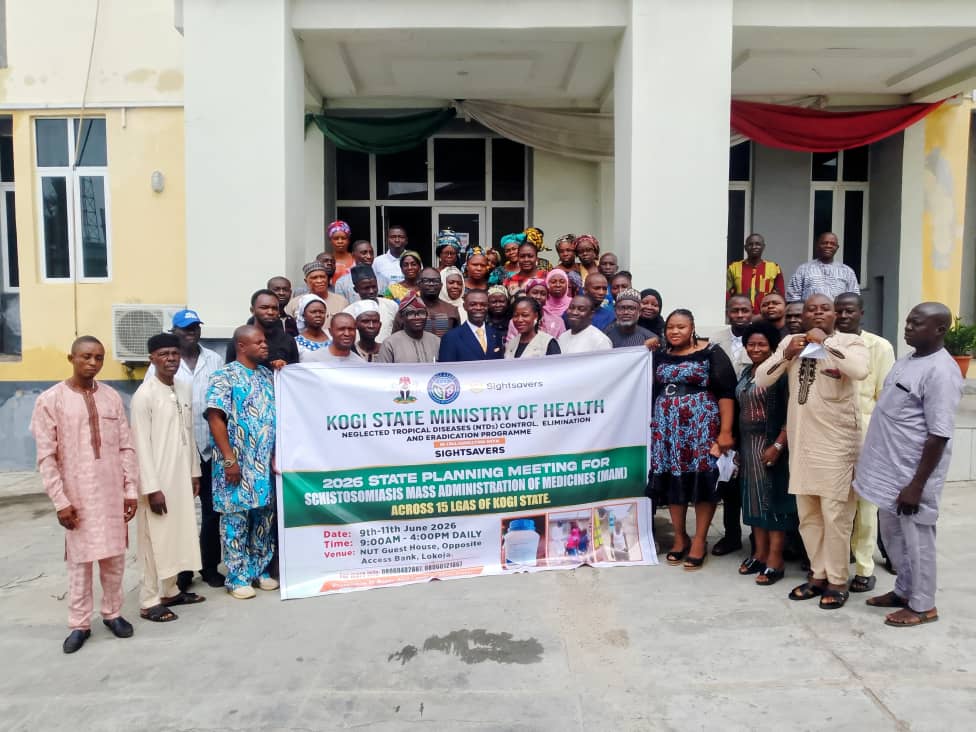
The target was unveiled during a two-day state-level planning meeting organized by the Ministry of Health’s Neglected Tropical Diseases (NTDs) Control Programme in collaboration with Sightsavers.
The meeting focused on developing strategies for achieving the 2026 treatment targets, validating drug requirements, strengthening micro-planning processes, and finalizing implementation plans for the campaign against schistosomiasis, also known as bilharzia.
Speaking at the opening of the meeting, the Commissioner for Health, Dr. Abdullazeez Adams, described schistosomiasis as a major public health concern in Kogi State, particularly among school-age children, farmers, fishermen and residents living near freshwater bodies.
Represented by the Permanent Secretary of the ministry, Mr. Maji Enoch, the commissioner said the disease negatively affects school attendance, productivity and overall health outcomes.
He explained that the planning session would assess previous treatment rounds, improve social mobilization efforts, enhance the training of teachers and Community Drug Distributors (CDDs), and ensure high standards in data collection, equity and beneficiary safety.
Adams commended Sightsavers and the Federal Ministry of Health for their continued technical and financial support, urging local government authorities and stakeholders to sustain collaboration in order to reach every eligible child.
The National Programme Manager at the Federal Ministry of Health, Dr. Jacob Solomon, said Nigeria remains committed to achieving the World Health Organization’s 2030 target for eliminating schistosomiasis and soil-transmitted helminthiasis.
He noted that Kogi State had recorded significant progress since the baseline mapping of the disease and called on stakeholders to remain focused on reaching vulnerable populations.
According to Solomon, the intervention is designed to reach all children aged five to 14 years, regardless of whether they are enrolled in school or not.
The State NTD Coordinator, Mr. Musa Momohjimoh, disclosed that Praziquantel, the recommended drug for treating schistosomiasis, would be administered in the 39 endemic wards identified through a 2015 survey and in line with revised WHO guidelines.
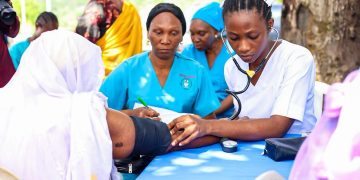
He explained that teachers would distribute the medication in schools under the supervision of health workers, while Community Drug Distributors would ensure out-of-school children are reached.
Momohjimoh added that public awareness campaigns, including radio jingles and engagement with religious and community leaders, would be deployed to encourage participation.
Also speaking, Sightsavers Programme Officer, Mrs. Phoebe Hindan, emphasized that treatment would only be carried out in communities where evidence showed a need for intervention.
She described Praziquantel as a safe and effective medicine that has been used successfully in Kogi State for more than a decade, urging parents and guardians to allow their children to participate in the programme.
Hindan acknowledged that misconceptions about the treatment had led to refusals in previous years and warned that untreated schistosomiasis could result in serious health complications.
The state government said the campaign would cover children in both public and private schools, as well as those outside the school system, advising parents to contact the Ministry of Health for further information.
A participant at the meeting and former Education Secretary of the Kogi Local Government Education Authority, Mr. Salihu Usman, pledged the commitment of stakeholders to ensuring a successful and impactful implementation of the exercise.