
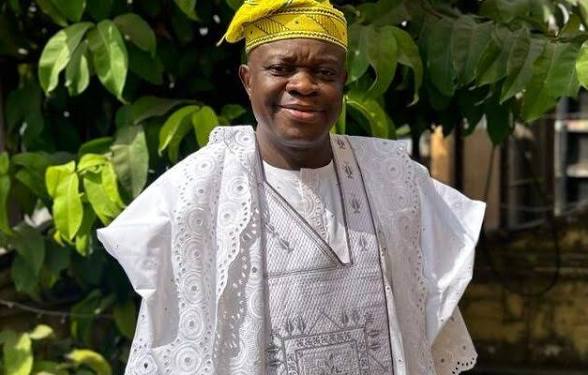

A transportation expert and former President of the Kogi Chamber of Commerce, Industry, Mines and Agriculture, Chief Femi Ajisafe, has called on the Federal Government to develop Nigeria’s inland waterways as an alternative means of transportation for passengers and cargo.
Ajisafe made the call while presenting a paper titled, “Bad Roads: Looking for Alternative Mode Through the Inland Waterways Corridor – Passenger and Cargo Transportation in Nigeria,” at the 2026 Press Week of the Correspondents’ Chapel of the Nigeria Union of Journalists (NUJ).
He said Nigeria’s transport system remains heavily dependent on road networks, despite the poor condition of most roads across the country.
According to him, Nigeria has about 195,000 kilometres of roads, with only about 30 per cent of them paved. He noted that the poor state of the roads has resulted in long travel times, frequent accidents, high vehicle maintenance costs and hardship for commuters and transporters.
“Road transportation in Nigeria has become a nightmare for vehicle owners, travellers and transporters,” he said.
Ajisafe explained that Nigeria’s inland waterways, estimated at about 10,000 kilometres, remain largely underutilised, even though about 3,000 kilometres are seasonally navigable.
He identified Rivers Niger and Benue as the country’s principal waterways, noting that both rivers converge at Lokoja and account for about 1,900 kilometres of navigable channels.
He said the two rivers have enormous potential to support trade, agriculture, fishing and transportation, but have yet to be fully harnessed.
“With congested roads and underutilised rail networks, it is time to transform our inland waterways into major transport hubs,” Ajisafe stated.
He described water transportation as cheaper and more environmentally friendly than road transport, especially for the movement of bulk goods.
According to him, transporting goods by water is between 20 and 30 per cent cheaper than using trucks, while also reducing carbon emissions and pressure on the nation’s highways.
Ajisafe said the development of inland waterways would create jobs in riverine communities and reduce the high rate of road accidents.
He, however, identified poor dredging, inadequate port infrastructure and limited barge operations as major challenges hindering the effective use of the waterways.
He said the depth of River Niger varies between one and six metres, making regular dredging necessary to ensure year-round navigation.
Ajisafe urged government to embark on continuous dredging and channelisation of the river to enable bigger barges to operate.
He also called for the upgrading of river ports in Lokoja, Makurdi and Onitsha through Public-Private Partnerships.
According to him, modernising the ports would improve cargo handling and boost trade along the waterways.
The chamber president further proposed the introduction of self-propelled barges with capacities ranging from 1,000 to 3,000 metric tonnes.
He said the barges would be capable of transporting cement, grains, fuel, fertilisers, construction materials, electronics, textiles and agricultural produce.
Ajisafe explained that each barge could carry the equivalent of between 30 and 50 trucks, while consuming significantly less fuel.
He proposed a Lagos-Onitsha water transport corridor linked to rail and road networks, saying such a route could eventually support international trade through the Gulf of Guinea.
He urged the government to begin with pilot projects, feasibility studies and the development of a national inland waterways transport policy.
Ajisafe also stressed the need for capacity building, including the training of personnel and the establishment of logistics hubs.
He expressed optimism that with proper investment and planning, Nigeria’s waterways could become a major driver of economic growth.
“It is time to turn the tide and make our inland waterways a key component of national development,” he said.