



Kogiflame
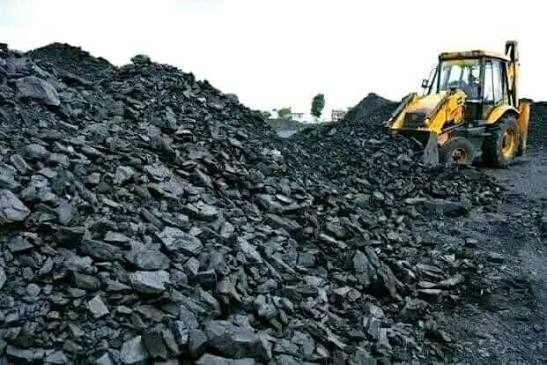
In the dark belly of Ankpa, the land groans. From Okobo to Enjema, Odagbo to Ika, and across the weary plains of Onupi, the ground that once nursed yam and cassava now exhales dust and despair. Beneath those trembling hills lies coal — the black heart of a dream turned nightmare.
It was once called “the new promise of Kogi.” Today, it is a curse wearing the mask of development.
WHEN THE LAND FEEDS ONLY THE GREEDY
Independent reports — from the FUDMA Journal of Sciences (2024) and SJEAT Journal (2025) — confirm what villagers already know: the air is poisoned, the water darkened, and the soil stripped of life. But these scientific proofs are only footnotes to a deeper tragedy — the betrayal of trust.
In Odagbo, for instance, hope was sold for pennies. Three years ago, farmers were lured into selling ancestral farmlands for next to nothing, deceived by company agents who came bearing smiles, envelopes, and fake promises of jobs and prosperity.
VOICE FROM THE FIELD — Odagbo, Ankpa LGA
“They told us the company would build roads and give our children work,” says Pa Ocholi Adaji, 67, whose two hectares now lie beneath black dust. “I sold my land for ₦250,000. Today I rent a small piece to plant maize. The stream we drank from is black, and my grandson coughs every night. If this is progress, it has buried us alive.”
We raised our voices years ago — through advocacy and civic campaigns warning against unregulated mining. We urged fairness, transparency, and restraint. But power, blinded by profit, turned our warnings into whispers.
THE BETRAYAL WITHIN
What makes the tragedy of Ankpa’s coalfields even darker is that the betrayal did not only come from faraway offices in Lokoja, it came from within the villages themselves.
Some traditional rulers, community heads, and youth leaders became instruments of exploitation. Seduced by brown envelopes and trips to Abuja, they signed deceitful “agreements” that sold their people’s future for crumbs.
They gathered villagers under trees and declared that “the government has approved” and “everyone will benefit.”
But when the bulldozers came, only a few benefited and the rest were buried in dust.
It is a bitter truth: some of those entrusted with protecting their people became brokers of their suffering.
They traded ancestral land for cheap promises, pocketed “community development” funds meant for schools and clinics, and posed for photographs beside company executives while their people coughed in the dark.
Leadership without conscience is treason.
THE COWARDICE OF POWER
From Lokoja, the silence continues.
The duty of government is to guard its citizens — not to act as brokers between corporations and communities. Yet, in Kogi, officialdom behaves like a paid consultant.
Where are the Environmental Impact Assessments mandated by law?
Where is the Health Audit tracking respiratory diseases among miners’ families?
Where is the Rehabilitation Fund promised in every Community Development Agreement?
What we have instead are handshakes, ribbon-cuttings, and photo-ops — while the real people of Ankpa bury their future under heaps of coal.
WHEN EVEN THE EARTH PROTESTS
And now, even the land itself has joined the cry.
Erosion has eaten through the veins of Ankpa, swallowing roads, washing away homes, and gashing farmlands into deep, silent wounds.
The once smooth paths that linked Odagbo to Enjema and Onupi are now jagged trenches. The roads that carried food and friendship are now broken arteries bleeding dust.
Every day, endless convoys of heavy trucks, groaning under the weight of coal, thunder down these ruined roads — while no new ones are built, and the old ones are left to decay. The people watch helplessly as each truck carries away not just coal, but the very soul of their land.
The irony is cruel: the land that fuels Nigeria’s industries cannot fuel its own survival.
THE PRICE OF SILENCE
We speaking out because every silence has a cost.
In Odagbo and Okobo, homes tremble from dynamite blasts. In Enjema, wells stink of chemicals. In Ika, the air carries a cough. In Onupi, children play in soot instead of grass.
The youth are not lazy — they are restless and angry. Angry that the jobs they were promised went to outsiders. Angry that compensation meant for them was swallowed by middlemen. Angry that those they trusted to defend them became gatekeepers of exploitation.
When the government refuses to act, and elders trade integrity for envelopes, the people begin to lose faith — not just in leadership, but in justice itself.
THE TEST OF LEADERSHIP
True leadership is not in motorcades or marble offices, but in moral courage — the will to stand between power and the powerless.
Kogi’s leaders, both political and traditional, must now decide:
Will they continue to dine with exploiters, or will they redeem their honour as custodians of their people’s dignity?
THE PATH TO REDEMPTION IS CLEAR:
Suspend all mining in Ankpa until independent environmental and health audits are complete.
Publish every Community Development Agreement for public scrutiny.
Establish a transparent Rehabilitation Fund jointly managed by civil society and the affected communities.
Prosecute all complicit leaders, whether political, traditional, or corporate.Anything less is betrayal.
THE CONSCIENCE OF THE SOIL
There comes a time when even the earth grows weary of injustice.
The soil of Ankpa, long patient under the feet of its people, now groans beneath the greed of those who should have been its guardians. The rivers whisper of betrayal. The hills carry the sighs of miners who died unheard. The wind itself seems to ask — how long will men sell what God gave freely?
In every faith, the earth is not mute; it is a living witness.
The Bible reminds us that “on that Day, the earth will tell its tales, because your Lord will inspire it”
When that day comes, what story will Kogi’s leaders tell — that they traded their people’s future for contracts and coal dust? That they stood by while their soil turned to sorrow?
Let those in power remember: wealth fades, but the cry of the oppressed never dies. The ground that feeds us can also curse us.
If there is still a spark of conscience left in the heart of this state, let it rise now — before the land, tired of waiting for justice, begins to speak for itself.