


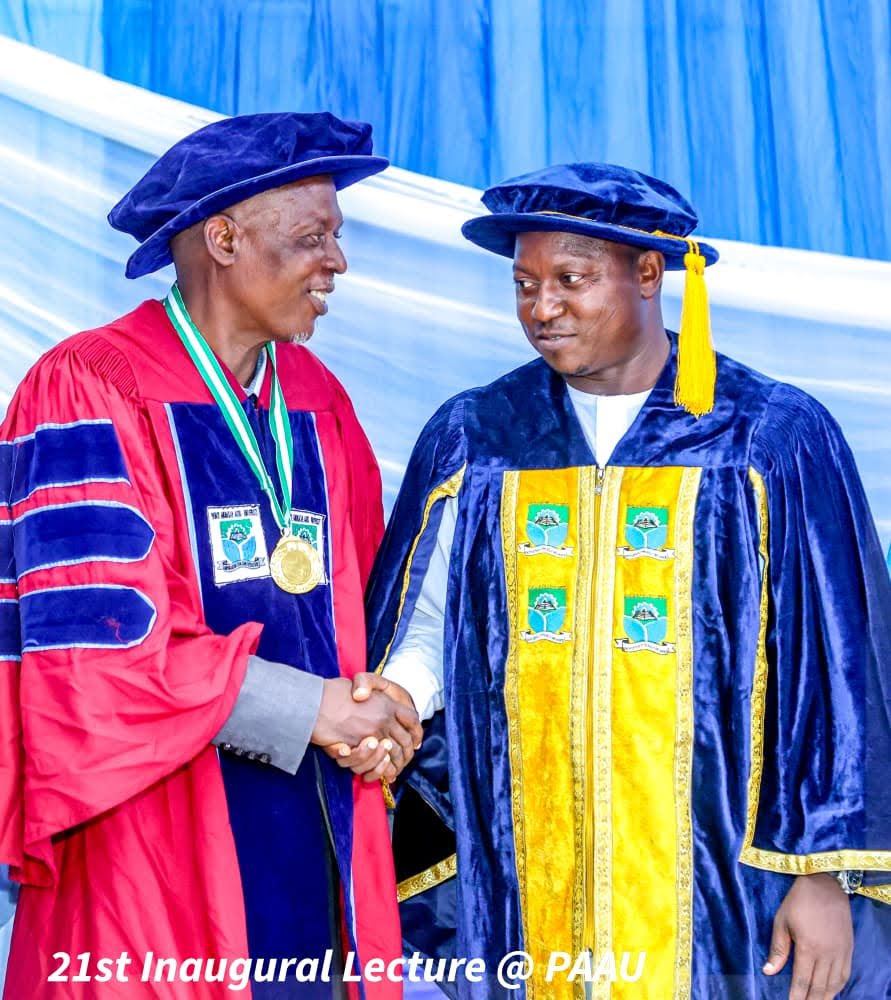


A Professor of Social Studies and Environmental Education at Prince Abubakar Audu University (PAAU), Anyigba, Professor Joseph Olukayode Ogunbiyi, has called for the integration of environmental values into Nigeria’s educational system, describing it as a crucial step toward achieving sustainable development.
Professor Ogunbiyi made the call while delivering the university’s 21st Inaugural Lecture titled “The Green Classroom: Integrating Environmental Values into Learning” at the institution’s auditorium.
The professor stressed that environmental education must go beyond classroom theory to become a practical and lifelong process that shapes attitudes, values and behaviours towards environmental protection.
According to him, schools should serve as centres where students learn to engage with environmental realities and adopt sustainable practices.
He noted that the world is currently facing growing environmental challenges, including pollution, deforestation, desertification, depletion of natural resources and the effects of industrialisation and urbanisation. He added that developing countries, especially Nigeria, are among the worst affected by these problems.
Describing the concept of the “Green Classroom,” Ogunbiyi said it promotes environmental consciousness through sustainability practices, eco-friendly behaviours and hands-on learning experiences that encourage students to become responsible stewards of the environment.
The inaugural lecturer traced the development of environmental education from major global milestones such as the 1972 Stockholm Conference, the 1975 Belgrade Charter, the 1977 Tbilisi Conference and the 1992 Rio Earth Summit, all of which emphasized the role of education in fostering environmentally responsible citizenship.
He identified inadequate funding, a shortage of trained professionals, an examination-driven curriculum, rapid urbanisation and poor environmental awareness as some of the major challenges hindering the growth of environmental education in Nigeria.
To address these challenges, Ogunbiyi recommended the adoption of Values Analysis and Values Clarification approaches in teaching environmental education. He explained that the strategies would help learners develop critical thinking skills and make informed decisions on environmental issues.
The professor also linked environmental education to the United Nations Sustainable Development Goals (SDGs), noting that effective environmental learning contributes directly to the achievement of goals related to quality education, clean water and sanitation, affordable and clean energy, sustainable cities, responsible consumption, climate action, life on land and partnerships for development.
As part of his recommendations, he proposed the establishment of a Bachelor of Education or Bachelor of Science degree programme in Environmental Education within the Department of Social Science Education.
He also urged government and educational institutions to strengthen environmental policies, increase funding for environmental learning, train more teachers and promote the adoption of Green Classrooms across the country.
According to him, environmental values learned in the classroom can be transformed into responsible actions that ultimately drive sustainable development.
In his remarks, the Vice-Chancellor of PAAU, Professor Salisu Ogbo Usman, described the lecture as a significant milestone in the institution’s academic history and the fourth inaugural lecture since he assumed office in February 2026.
He noted that the theme of the lecture was timely, given the growing global concerns over climate change, biodiversity loss, pollution and other environmental threats.
Professor Usman emphasized that education remains one of the most effective tools for promoting environmental responsibility and sustainable development, reaffirming the university’s commitment to supporting research and academic programmes that contribute to environmental stewardship.
The Vice-Chancellor also used the occasion to express condolences over the death of Mr. David Ocholi Solomon, a 300-level Biochemistry student, assuring the university community that justice would be pursued.
He disclosed that suspects linked to the incident had been apprehended by the university’s security personnel and handed over to law enforcement agencies for investigation and prosecution.
The event featured the presentation of an inaugural lecture certificate, plaque and medal to Professor Ogunbiyi and attracted members of the university management, Senate, academic staff, students, traditional rulers, religious leaders and other distinguished guests from within and outside the university community.