

By Tunde Olusunle
It was most appropriate that the University of Abuja, which has since been renamed Yakubu Gowon University, chose for the inaugural public lecture series on research findings of its Leadership and Governance Centre, a topic which devolved from its recent experiences in leadership succession.
In the aftermath of the completion of the five-year tenure of Abdulrasheed Na’Allah as Vice-Chancellor of the institution mid-2024, the university would go through the next year and half, without a substantive chief executive.
In the twilight of his tenure as Vice-Chancellor, Na’Allah was indeed taken to court by some academics in the institution, over an internal council election. Aisha Sani Maikudi, and Mathew Adamu, both professors in the institution, took their turns to steer the ship of system, while the federal government, proprietor of the university, shopped for Na’Allah’s replacement.
Such was the level of leadership unsettledness which engulfed the university for a near two-year stretch, threatening the gains of preexisting stability.
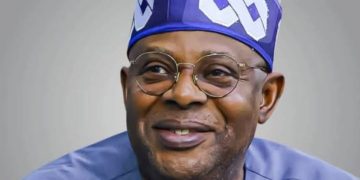
The reconstitution of the Governing Council of the institution by President Bola Tinubu, May 27, 2025, which witnessed the installation of Dr Olanrewaju Tejuoso, a member of the 8th Nigerian Senate, between 2015 and 2019 as Pro-Chancellor and Chairman of Council, breathed a new air into the institution.
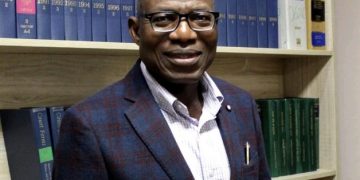
Tejuoso who had hitherto served in a similar capacity at the University of Lagos, moved swiftly to restore order in the drifting foremost tertiary institution in the nation’s capital. By November 7, 2025, the Council had identified Hakeem Babatunde Fawehinmi, 56, a Professor of Clinical Anatomy and Biomedical Anthropology, who was Vice-Chancellor of the Nigerian-British University, Oke-Ikpe, Aba, Abia State, as the new chief executive of the university.
He took over from Adamu during the 2025 yuletide and has striven to engender rapprochement and cohesiveness amongst various groups and interests in the academic community, and refocus the citadel to its core concerns of learning and research.
Only a handful of technocrats or administrators, perhaps, will be as well informed, competent and authorial to speak on the gamut of education and administration in Nigeria today, as Sonny Togo Echono, the multi-sided professional and systems expert. True, he trained as an architect and once led the umbrella national body of the specialty.
The last decade of his life and career has been one of wholesale immersion in educational governance and administration. Before his appointment as Executive Secretary of the Tertiary Education Trust Fund, (TETFUND), by erstwhile President Muhammadu Buhari in 2022, Echono’s last five years as Federal Permanent Secretary beginning from 2017, was spent in the Federal Ministry of Education.
He had barely caught his breath in retirement after a most eventful 35 years in public service, when further national duty beckoned. Into the fifth year at the headship of TETFUND, his tenure has overseen some of the most profound reforms and developments in the nation’s tertiary institution ecosystem.
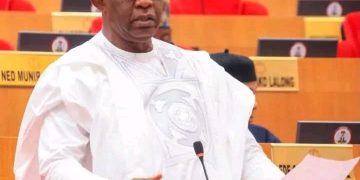
Thursday June 18, 2026, Echono took to the lectern at the University of Abuja to speak to the subject “Leadership Selection Process and Governance of Federal Universities in Nigeria,” within the three decades stretching from 1993 to 2024. It was the premiere edition of a series which would see graduate doctoral researchers, share the findings of their interrogations with the broader society.
His presentation established a nexus between leadership selection process and governance outcomes in federal universities in Nigeria. Of the 312 universities accredited by the National Universities Commission, (NUC), at least a quarter, 80 that is, are owned by the federal government, with enrolment figures running into millions of students.
It is therefore a very critical segment of the nation’s educational superstructure in the production of educated, trained and skilled manpower, to drive various subsets of the diverse socioeconomy.
Echono noted that whereas Nigeria had one of Africa’s most developed university systems at independence in 1960, standards fell over the years owing to a plethora of factors. Second Republic politics, he observed, indeed engendered ethnicity and a lowering of the lofty standards which previously characterised the recruitment process for university leadership, in the years Nigeria competed with its peers in the Commonwealth and the world at large.
With such parochialism, according to Echono, came deepening localisation, ethnic and religious bigotry, declining academic and research outputs and a growing perception of irrelevance. These have collectively pushed Nigeria down the pyramid of educational advancement where it pathetically ranks 23 in Africa and 191 globally.
Leadership selection process in federal universities has been tainted by nepotism, corruption, violence, resort to spiritism, violence, trauma, even the manipulation of extant university regulations.
Poor university governance, Echono posited, has manifested in falling academic standards and quality, frequent disruptions in academic calendar occasioned by industrial actions, the brain drain syndrome which has cost Nigeria some of its most prized human assets, and reduced global competitiveness. It is common knowledge that the veracity of Nigerian university degrees have been questioned by foreign institutions and prospective Nigerian postgraduate students subjected to prescribed tests and examinations, whereas academic transcripts once sufficed.
Nigeria once produced some of the finest, most iconic university administrators ever and indeed exported expertise to other countries. There were the Kenneth Onwuka Dikes, Eni Njokus, Saburi Biobakus, JF Ade-Ajayis, Tekena Tamunos, Adamu Baikies, Oladipo Olujimi Akinkugbes, Iya Abubakars, Grace Alele-Williams, Afolabi Toyes, Adeoye Adeniyis, and so on who could hold their own against the best administrators from Oxford or Harvard or MIT. Donald Ekong was the pioneer Vice-chancellor of the University of The Gambia, (UTG), between 1999 and 2005; and more recently, Ahmed Adamu was appointed the foundation Vice-Chancellor of the University of Education of The Gambia. Nazmat Surajudeen-Bakinde is the substantive Vice-Chancellor of the University of Applied Science, Engineering and Technology, (USET), also in The Gambia.
Emeka Akaezuwa presently serves as Vice-Chancellor of the International University of East Africa, (IUEA), in Kampala, Uganda; Eyitope Ogunbodede served as Vice-Chancellor of the University of Eswatini, Swaziland, before serving in the same position at the Obafemi Awolowo University, (OAU), Ile-Ife, and Babatunde Agboola was also Vice-Chancellor at Gretsa University, Thika, Kenya. Ogechi Agboola is the incumbent Deputy Vice-Chancellor (Academics) at the University of Kigali, Rwanda. Ilesanmi Adesida served as Vice-Chancellor for Academic Affairs and Provost at the University of Illinois at Urbana-Champaign, United States of America, between 2012 and 2015, while Charles Egbu made history in November 2020 when he was appointed Vice-Chancellor of Leeds Trinity University, becoming the first Black African to lead a mainstream university in the United Kingdom. David Uzo Mba currently serves as Vice-Chancellor of Birmingham City University, also in the United Kingdom.
These appointments highlight the sheer quality of Nigerian academics, as administrator-potentates, and the extensive reach and respect Nigeria enjoys in educational management across the world. This is the kind of standard Echono wants Nigeria to replicate at home and indeed consolidate for national development. He thus canvassed the emplacement of clear guidelines for leadership selection which should incorporate the enforcement of clear, standardised guidelines for leadership selection in federal universities. This should outline transparent procedures for appointments, criteria for qualifications and mechanisms for stakeholder involvement. A full-circle return to holistic merit in the appointment of Vice-Chancellors using criteria such as qualification, scholarship, experience, integrity, among others, while also ensuring inclusivity and diversity, will salvage governance ethic in our federal universities.
Director of the Abuja Leadership Centre of the institution, Professor Abdulhamid Ozohu-Suleiman, applauded the Vice-Chancellor, Professor Fawehinmi, chief host of the event, for his focused leadership which he noted has brought peace and stability to the University of Abuja, within just months of his assumption of office. He alluded to Fawehinmi’s open door management policy and his capacity to give fair hearing to all.
He noted that the alumni lecture series aims “to expand the banquet for the communion of Town and Gown, and also to reverse the age-long practice of trapping intellectual works in inaccessible bookshelves where they are consigned to the vagaries of the elements and rodents.”
Ozohu-Suleiman observed that the innovation ensures that cutting edge doctoral theses are publicly presented, published and shared with critical stakeholders.
Despite being a workday, Echono commanded a respectable array of dignitaries at the lecture, which held at the auditorium of the law faculty of the university. The facility, by some coincidence, was previously rehabilitated by TETFUND. Retired Major-General Lawrence Onoja, former military governor of Plateau and Katsina states; the Member representing the South West on the Board of Trustees of TETFUND, Sunday Adepoju, who stood in for the Chairman and former Governor of Katsina State, Aminu Bello Masari, as well as former Member of the House of Representatives and human rights activist, Abdul Oroh, were in attendance.
Professor Yakubu Aboki Ochefu, Secretary to the Committee of Vice-Chancellors and Ochetoha K’Idoma, was represented, as were the Corps Marshal of the Federal Road Safety Corps, (FRSC), Shehu Mohammed and the Comptroller-General of the Federal Fire Service, (FFS), Samuel Olumode Adeyemi.
The university community participated robustly, with the Deputy Vice-Chancellor (Academic), Professor Rosemary Udeozor, joining other principal officers of the institution, Deans of Faculty, Heads of Departments, Professors, as well as Echono’s project supervisor, Professor Ukerto Gabriel Moti, in gracing the lecture.
Tunde Olusunle, PhD, Fellow of the Association of Nigerian Authors, (FANA), teaches Creative Writing at the University of Abuja