


By Yekini Jimoh
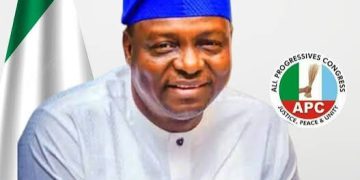
The All Progressives Congress (APC) has maintained a firm grip on Kogi State politics since 2015, and recent political developments suggest that the party’s influence has become even more entrenched under the leadership of Governor Ahmed Usman Ododo and his predecessor, Alhaji Yahaya Bello.
Political observers often describe Kogi as one of the strongest APC-controlled states in Nigeria, largely due to the enduring political structure built by Bello during his eight-year administration and sustained by Governor Ododo since assuming office in January 2024.
Yahaya Bello remains the undisputed political leader of the APC in Kogi State. Although he no longer occupies the Government House, his influence within the party has remained significant.
Bello played a central role in the emergence of Ododo as APC governorship candidate and subsequently mobilized the party structure that secured victory in the 2023 governorship election.
Political analysts view Ododo’s emergence as evidence of Bello’s strong control of the party machinery across the state’s three senatorial districts.
Since taking office, Governor Ododo has consistently acknowledged Bello’s role in his political journey while simultaneously strengthening his own position within the party. The governor has maintained close ties with APC stakeholders at the ward, local government and state levels, helping to preserve internal cohesion within the ruling party.
His administration has also focused on expanding the APC’s political base through outreach programmes and strategic engagement with opposition figures. One of the strongest indicators of APC’s dominance in Kogi has been the steady influx of politicians from opposition parties into the ruling party.
Several high-profile defections, including those involving former political office holders and grassroots leaders, have strengthened APC’s numerical and strategic advantage across the state. Governor Ododo has repeatedly attributed these defections to confidence in the party’s leadership and governance agenda.
The party’s organizational strength was further demonstrated during the APC state congress where party executives emerged through a consensus arrangement, reflecting the level of unity among major stakeholders.
The emergence of a new state executive without significant internal disputes reinforced perceptions that the party leadership remains firmly under the influence of established political actors led by Bello and supported by Governor Ododo.
Perhaps the clearest demonstration of APC’s control in Kogi was the large endorsement rally held in Lokoja where party stakeholders unanimously endorsed President Bola Ahmed Tinubu and Governor Ododo for second terms ahead of the 2027 elections.
The rally attracted party executives, elected officials, youth groups, women organizations and grassroots members from across the state. Former Governor Bello personally moved the motion for the endorsement, a development that highlighted both his continued influence and the alignment between him and the current governor.
Supporters argue that the APC’s dominance is a product of effective political organization, strategic leadership and sustained grassroots engagement.
They point to the party’s electoral successes, expanding membership and relatively stable internal structure as evidence of its popularity among Kogi voters. The party leadership has also emphasized unity and discipline as key factors behind its continued success.
Critics, however, contend that the overwhelming strength of a single political party could weaken opposition politics and reduce electoral competitiveness.
Some political commentators argue that a vibrant democracy requires strong opposition parties capable of providing alternative policy options and holding the government accountable. Nonetheless, the reality on ground remains that APC currently enjoys a significant advantage over rival political parties in the state.
As preparations gradually begin for the 2027 general elections, the political equation in Kogi appears increasingly clear. Governor Ahmed Usman Ododo controls the instruments of government while Yahaya Bello continues to command enormous influence within the party structure. Together, both leaders have succeeded in maintaining APC’s position as the dominant political force in Kogi State.
Whether this dominance will translate into continued electoral victories in future elections remains to be seen. However, based on current political realities, the APC under the combined influence of Ododo and Yahaya Bello remains the most formidable political machine in Kogi State.