

Kogiflame
The Kogi State Programme Manager of Malaria Consortium, Okwulu Andrew, has disclosed that in the year 2024, no fewer that 40,678 confirmed Malaria cases in children under 5 years were recorded.
Okwulu who disclosed this on Tuesday during the 2025 Seasonal Malaria Chemoprevention, (SMC), Media workshop in Lokoja, noted that out of this 40,678 cases, 683 are severe malaria cases leading to hospitalization with 12 deaths recorded.
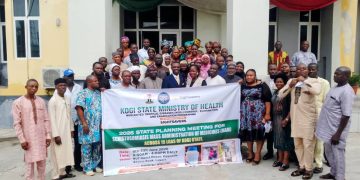
According to him, the main objective of the media parley is to sensitized Media practitioners on the need to carry out aggressive media campaign on the activities of Malaria Consortium, which deals with children under 03- 59 months.
He noted that this category of children are the most vulnerable, hence the concentration on prevention, control, and treatment of malaria and other communicable diseases, particularly among children under five.
“Malaria Consortium is a leading international non-profit organization specializing in the prevention, control, and treatment of malaria and other communicable diseases, particularly among children under five. Established in 2003, it operates in Africa and Asia, working with governments and partners to strengthen health service delivery.
In his welcome address the programme Manager, Kogi State Malaria Elimination programme, (SMEP), Pharm. Rabiu Salihu Muhammed, noted that the media parley will help to influence public perception and create awareness about key indicators of the Seasonal Malaria Chemoprevention (SMC).
He appealed to Media practitioners to form synergy with the malaria consortium, to ensure that healthcare givers carry out their duties to the best of their abilities.
He noted that some of the problems sometimes encountered in the course of the implementation of the programme includes, security concern, flooding hard -to- reach areas among others.
Speaking also, Orimodu Matthew
ACSM/SBCC Specialist, State Malaria Elimination Programme,
Ministry of Health, noted that as good as this project may look, there are some challenges impeding it’s smooth implementation, calling on all participants to be part of finding solutions to these challenges.
He listed these challenges to include; Funding and resource mobilization constraints, Logistics and supply chain management Implementation, Human resources Training and deployment of community health workers and Community acceptance.
Others are; Adherence to implementation reminders, Drug resistance control, non Integration with existing health systems, problem associated with Monitoring and evaluation, Geographic accessibility, Political instability, Drug stockouts , Training and capacity building among other challenges.
He said in other to mitigate this challenges, there is need to seek funding from international organizations, governments, and private donors and as well explore public-private partnerships, adding that a robust supply chain management system and leveraging technology for tracking, monitoring and partnering with logistics experts will help to mitigate these challenges.
He noted that for effective implementation, the consortium must leverage existing healthcare infrastructure, Provide incentives for healthcare workers and as well Conduct community sensitization and education campaigns, engaging local leaders and influencer to enhance Community acceptance, saying that the media has a big role to play in this regard.
He said by addressing these challenges and implementing these solutions, SMC programmes can be more effective in preventing malaria and reducing the burden of the disease.
Dr. Salamatu Yahaya, State Team Lead of FHCI, Maryam Edmond, community System Strengthening Manager of Famkris Health Care Initiative and other speakers at the parley, called for effective collaborations and supervision to obtain the overall objectives of the projects.