


No fewer than 4,216 candidates with disabilities have secured admission into universities, polytechnics and colleges of education across Nigeria over the past decade through the Joint Admissions and Matriculation Board (JAMB) Equal Opportunity Group (JEOG).
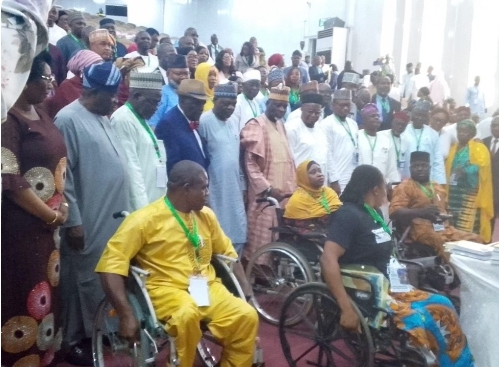
Chairman of the JEOG and former Executive Secretary of the National Universities Commission (NUC), Emeritus Professor Peter Okebukola, disclosed this during the 2026 JAMB National Stakeholder Engagement on Inclusivity and Higher Education held at the NUC headquarters in Abuja.
The JAMB Equal Opportunity Group was established under the leadership of the outgoing JAMB Registrar, Professor Is-haq Oloyede, to ensure that candidates with disabilities have equal access to the Unified Tertiary Matriculation Examination (UTME) and admission into tertiary institutions.
Okebukola said the initiative has achieved remarkable success in its 10 years of operation, revealing that an average of 53 per cent of participating candidates gain admission into universities, polytechnics and colleges of education annually.
According to him, beneficiaries include candidates living with visual impairment, autism, Down syndrome, albinism and other forms of disability.
“In the last 10 years, we have had 4,216 candidates with different categories of disabilities participate in the programme. On the average, about 53 per cent of them gain admission into universities, polytechnics and colleges of education every year,” he said.
He stressed that the Board maintains the same academic standards for all candidates, noting that persons with disabilities write the same examination as every other UTME candidate.
“We do not lower standards for them. They answer the same questions as every other candidate. I am continually amazed by how excellently they perform. Many of them are exceptionally brilliant,” Okebukola added.
He further noted that many beneficiaries of the programme have excelled in highly competitive courses, including Law and other professional disciplines, proving that disability is not a barrier to academic excellence when adequate support systems are provided.
Speaking on the theme of the stakeholders’ engagement, Okebukola said participants examined how Artificial Intelligence (AI) could be harnessed to advance inclusive higher education in Nigeria.
He explained that the meeting provided an opportunity to assess the gains recorded over the past decade while exploring innovative ways AI could improve accessibility and learning outcomes for students with disabilities.
As part of activities marking the anniversary of the initiative, two books were unveiled. One of the publications, A Peep into the Future of Higher Education in Nigeria, was produced in honour of Professor Oloyede and contains contributions from 44 scholars on the future of Nigeria’s higher education sector.
The second book, Early Start, Great Finish: Survival and Success – Manual for Underage Students in Nigerian Universities, authored by Okebukola, offers practical guidance for parents, lecturers, administrators and other stakeholders on supporting exceptionally gifted students admitted into universities before the age of 16.
According to him, the manual was developed after extensive consultations with 468 scholars and underage students, with emphasis on helping young undergraduates overcome challenges such as bullying, emotional adjustment and social integration.
The event also featured tributes to Professor Oloyede from education stakeholders, including the Executive Secretary of the Tertiary Education Trust Fund (TETFund), Dr. Sonny Echono, who commended the outgoing JAMB Registrar for reforms that have enhanced the credibility of the UTME and expanded educational opportunities for persons with disabilities.
JAMB also honoured outstanding members of staff, particularly those in its Information Technology Department, for their contributions to improving the Board’s operations, while several tertiary institutions received awards for their commitment to admitting and supporting candidates with disabilities.