

By Yekini Jimoh
As the political landscape gradually tilts toward the 2027 general elections, conversations around representation, performance, and continuity have begun to dominate public discourse.
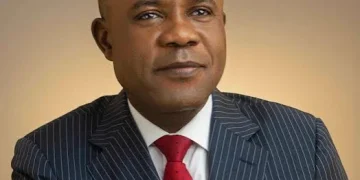
In Kogi West Senatorial District, one name continues to resonate across communities, political blocs, and development circles—Senator Sunday Karimi.
The case for his re-election is not merely political; it is deeply rooted in performance, visibility, and tangible impact. Since assuming office at the National Assembly, Senator Karimi has demonstrated a rare blend of legislative effectiveness and grassroots connection.
At a time when many lawmakers struggle to balance policy-making with constituency engagement, Karimi has proven that both can be pursued with equal vigor. His presence is felt not only in Abuja but across the towns and villages of Kogi West.
One of the strongest arguments for his second term lies in his infrastructure drive. The facilitation of federal road projects, particularly the rehabilitation of critical routes within the senatorial district, reflects a deliberate effort to open up economic corridors and improve connectivity.
For a region long plagued by infrastructural neglect, these interventions are more than projects—they are lifelines.
In the education sector, Senator Karimi has shown commendable foresight.
His push for the establishment and upgrade of Computer-Based Test (CBT) centres across the district is a strategic response to modern academic demands. By bringing such facilities closer to students, he is not only reducing the burden of travel but also expanding access to opportunities for young people.
Equally significant is his empowerment agenda.
Across Kogi West, beneficiaries of various empowerment programmes ranging from skill acquisition to financial support stand as evidence of a representation that prioritizes people. These initiatives have contributed to small business growth, youth engagement, and community resilience.
Legislatively, Senator Karimi has remained active and purposeful.His contributions on the floor of the Senate and participation in committees underline a commitment to national development while ensuring that Kogi West’s interests are well represented. He has not been a silent lawmaker; he has been a voice.
Critics may argue that every political office demands rotation or fresh faces, but governance is not an experiment in constant disruption. Where performance is evident and momentum is building, continuity becomes a strategic necessity. Re-electing Senator Karimi would mean consolidating gains, completing ongoing projects, and sustaining a trajectory of growth.
Leadership is ultimately measured by results, and in this regard, Senator Sunday Karimi has set a compelling standard. His re-election would not just be a political victory; it would be a reaffirmation of effective representation.
As 2027 approaches, the people of Kogi West are faced with a clear choice: to reset the clock or to build on a foundation already yielding results. For many, the answer is becoming increasingly obvious continuity with Senator Sunday Karimi is not just desirable, it is essential.