


Kogiflame
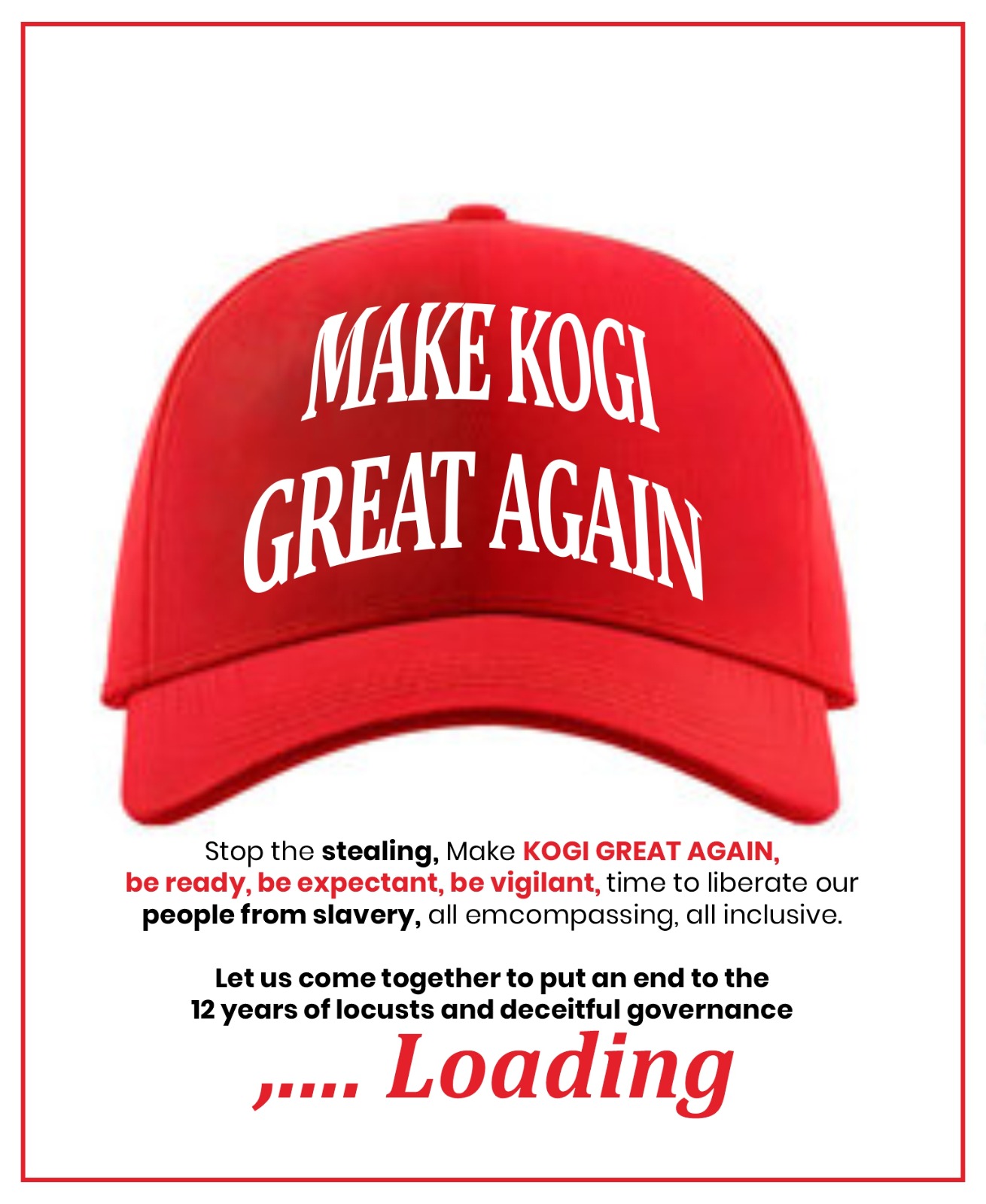
Something unusual is stirring within the All Progressives Congress (APC) in Kogi State. Beneath the surface of official loyalty pledges and carefully choreographed rallies lies a silent rebellion, one that has begun to take shape through a single symbol: a red cap boldly emblazoned with the words “MAKE KOGI GREAT AGAIN.”
In the aftermath of the so-called “President Tinubu 2027 endorsement rally” recently organized in Lokoja by Governor Usman Ododo and his predecessor, Yahaya Bello, a new wave of dissent has begun to ripple across the state’s political landscape. What was intended to be a show of unity has instead exposed a widening fracture in the ruling party — a division that many say could determine the future of the APC in Kogi ahead of the 2027 elections.
The emergence of the red cap is not accidental. It is a political statement, subtle yet defiant launched by a faction within the Kogi APC that feels alienated, sidelined, and silenced by the current state leadership. Circulating widely across social media platforms, political WhatsApp groups, and community gatherings, the cap has become the unofficial badge of discontent among those who believe Kogi has endured “twelve years of locusts and deceitful governance.”
Attached to the cap is a striking message:
“Stop the stealing, Make KOGI GREAT AGAIN, be ready, be expectant, be vigilant, time to liberate our people from slavery, all encompassing, all inclusive.
Let us come together to put an end to the 12 years of locusts and deceitful governance … Loading.”
This message, dripping with symbolic anger and hope, has become the rallying cry of those who see the current Bello–Ododo political structure not as continuity, but as captivity. To them, the word “liberation” captures the state’s need for internal emancipation not from opposition parties, but from what they call the “colonialism of greed and control” within their own ranks.
The so-called endorsement rally in Lokoja, meant to project loyalty to President Bola Ahmed Tinubu has ironically ignited the fiercest internal storm the Kogi APC has witnessed since 2019. Many within the party dismissed the gathering as a “stage-managed spectacle,” accusing the organizers of exploiting the President’s name to strengthen personal political relevance.
Party insiders told this reporter that the rally was never sanctioned by the national leadership of the APC. Instead, it was allegedly orchestrated to portray an illusion of unity and to consolidate the dominance of the Ododo–Bello political machinery.
“This is not about Tinubu,” said one aggrieved APC stakeholder who requested anonymity. “This is about power retention, control, and the fear of losing grip on the state structure before 2027. If the President himself knew how that rally was packaged, he would disassociate from it immediately.”
Another party chieftain described the event as “a desperate attempt to manipulate perception,” adding that “the people are tired of deceitful propaganda dressed as loyalty.”
For many Kogites, the last twelve years have been a cycle of unfulfilled promises. From unpaid workers’ salaries to decaying infrastructure and unending political showmanship, the people’s patience appears to have worn thin. The faction behind the red cap movement insists that Kogi’s political future cannot be built on the same foundation of manipulation and fear. Their slogan — “Stop the stealing, be vigilant, liberate our people” — is a direct assault on the status quo and a call for ideological cleansing within the APC.
They accuse the current leadership of turning the party into a personal empire, where loyalty is traded for survival and dissent is punished with exclusion. To them, the Lokoja rally was a mockery of democracy and an insult to the intelligence of genuine progressives within the state.
While the faction has not yet declared its official leadership or political direction, its influence is growing across the three senatorial districts of Kogi State. From Okene to Ankpa, from Kabba to Idah, the red cap is fast becoming a silent identifier — worn proudly by those who believe the state deserves better.
Unlike traditional political campaigns, the movement is subtle and symbolic. No loud rallies, no press statements — just images of the red cap circulating online with cryptic captions like “It’s time,” “Freedom begins,” and “Loading…”
Behind the anonymity lies strategic precision. Party insiders reveal that the faction is quietly consolidating grassroots support, engaging disenchanted members, and preparing for what they describe as a “sweeping reform agenda” ahead of the 2027 elections.
One senior APC member told Naija Reality News:
“What you see now is just a teaser. The red cap is only the beginning. By next year, this movement will have a face, a voice, and a structure. Kogi APC cannot remain a private estate for a few individuals. We will reclaim it for the people.”
Kogi APC today stands at a dangerous crossroads. On the surface, Governor Ododo projects an image of peace, continuity, and unity. But behind the curtain, mistrust and resentment simmer among stakeholders who feel marginalized.
Many argue that the governor’s attempt to inherit Bello’s political dominance has created a rift between the ruling circle and the broader party base. What was once touted as “continuity” has, in the eyes of many, become “complicity.”
Political observers believe that unless reconciliation efforts begin soon, the APC risks walking into the 2027 elections as a divided house. And if history is any guide, divided parties often lose not to the opposition, but to their own internal contradictions.
The choice of a red cap as the movement’s emblem is deeply symbolic. In Kogi’s evolving political narrative, red represents both warning and awakening — a visual alarm against complacency. It is not just a cap; it is a statement of resistance against political servitude and systemic deceit.
Every image of the cap shared online carries a message of defiance, a declaration that Kogi’s destiny can no longer be held hostage by recycled promises and self-serving loyalties. The cap has become a metaphorical weapon, soft to touch, but heavy with meaning.
As the 2027 elections inch closer, the APC in Kogi faces an existential dilemma. The red cap movement has already shifted the conversation from loyalty to accountability, from blind endorsement to ideological alignment. The rally meant to solidify power has instead unleashed a quiet revolution.
The phrase “Loading…” at the end of the faction’s message encapsulates what is to come — a buildup, a preparation, a countdown. It hints at an inevitable confrontation between the old guard and a new generation of progressives determined to rewrite Kogi’s political story.
The storm is indeed gathering, and when it finally breaks, the red cap may no longer be just a symbol, it may become the emblem of a political awakening that redefines the soul of the APC in Kogi State.
History will remember this moment when courage took the shape of a cap, and silence became the loudest protest against twelve years of deceitful governance.