


By Yekini Jimoh
As preparations begin for another electoral cycle, constituents of Kogi West Senatorial District are increasingly evaluating the performance of Senator Sunday Karimi in the National Assembly.
His first term has been defined by legislative participation, constituency interventions, and efforts to attract federal presence to the district.
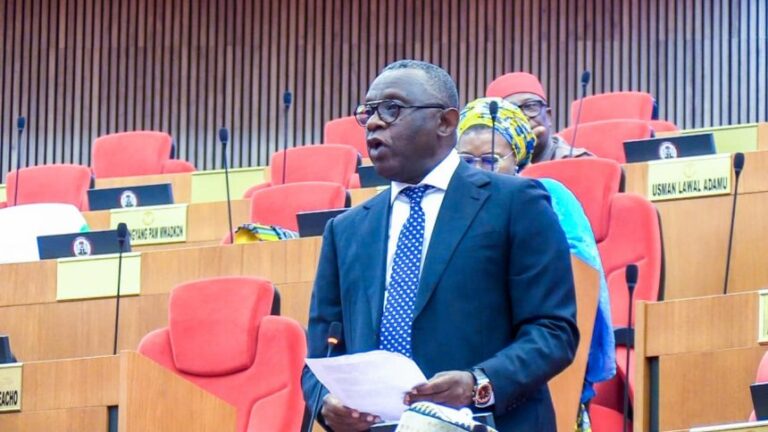
On the legislative front, Senator Karimi has contributed to debates on national issues, particularly in areas relating to governance, infrastructure, and social welfare. Records from the Senate indicate that he has supported several motions and bills aimed at improving economic stability and strengthening institutional frameworks. While not among the most vocal lawmakers, his committee engagements and voting record reflect consistent participation in parliamentary duties.
In terms of constituency development, his tenure has seen the rollout of various empowerment initiatives. Hundreds of constituents have reportedly benefited from skills acquisition programmes, small business grants, and agricultural support schemes. These interventions are designed to address unemployment and boost local enterprise, especially among youths and women.
Education has also featured prominently in his constituency projects.
There have been distributions of educational materials such as textbooks and scholarships for indigent students across several local government areas in Kogi West. In some communities, classroom renovations and minor infrastructure upgrades have been facilitated to improve learning conditions.
Healthcare interventions form another pillar of his outreach. Medical outreach programmes—ranging from free consultations to the distribution of essential drugs—have been organized in rural communities where access to healthcare remains limited. These initiatives, though periodic, have provided relief to underserved populations.
Infrastructure advocacy remains a critical area of focus.
Senator Karimi has been associated with efforts to lobby for federal road rehabilitation projects linking key towns within the district. While large-scale infrastructure delivery often depends on executive agencies, his role in pushing for inclusion of such projects in federal budgets has been acknowledged by stakeholders.
Water and electrification projects have also been cited among his achievements. Borehole installations in select communities and facilitation of rural electrification components have contributed to improving living standards, although coverage remains uneven across the district.
Another key metric in assessing his performance is accessibility.
Constituents and political observers note that he has maintained a visible presence during key community engagements, consultations, and political gatherings. However, like many public officials, expectations for more structured and frequent communication channels persist.
Despite these efforts, criticisms remain. Some constituents argue that the scale of impact does not match the vast needs of the district. Concerns have also been raised about the distribution of projects and whether all areas have benefited equitably. These concerns underscore the importance of transparency and inclusiveness in representation.
As voters look ahead, the decision will likely hinge on how they interpret these achievements relative to their expectations. For some, the continuation of ongoing projects and the advantage of legislative experience may be compelling. For others, the desire for broader impact and accelerated development may shape their considerations.